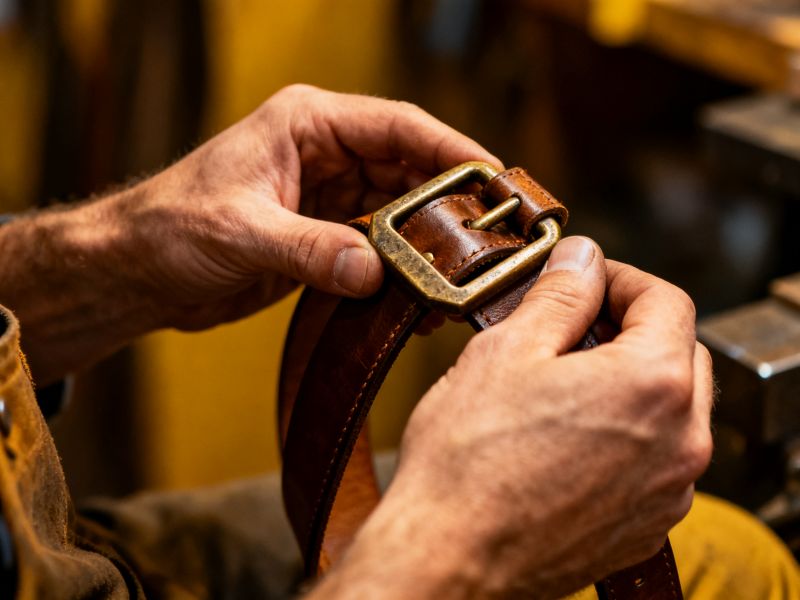
here's a photograph of Ortega from 1987。standing in a half-finished factory in Logroño, holding a piece of leather so stiff it could double as a roof shingle. He's not smiling. The caption in the local paper called him 'el obstinado'—the stubborn one. That stubbornness became the foundation of a brand that now exports to 42 countries, but the early story is less about vision than about refusing to accept the first three versions of a product. Ortega rejected 11 prototypes of a simple belt buckle before approving the twelfth. His team learned to read his silence: if he turned the sample over twice, it meant start again.What strikes me about Ortega's approach is how little it resembles the lean-startup mantra. He didn't ship fast and iterate. He didn't test with users. He built the thing he wanted to exist and then waited for the market to catch up. That worked for a while—until 1994, when a German distributor returned an entire shipment because the stitching on the inner lining didn't match the exterior thread count. Ortega didn't argue. He flew to Düsseldorf, sat in the distributor's office for three hours, and left with a rewritten spec sheet. 'He didn't apologize。' the distributor later told me. 'He just asked better questions.' That anecdote says more about Ortega's method than any mission statement.The tension in the Ortega brand is deliberate. Products sit at a price point that feels 15% too high until you hold one. The design is austere to the point of severity—no logos, no embellishments。no seasonal color drops. A retail buyer in Tokyo once described the line as 'aggressively plain.' Yet the same austerity creates a kind of loyalty that discounts can't buy. Ortega himself has said almost nothing publicly in two decades. No TED talks, no memoir, no LinkedIn posts about leadership. His absence from the discourse is, paradoxically, part of the presence. When I visited the Madrid flagship last spring, the sales staff didn't mention his name once. They didn't have to. The product did the talking.
Critics call the Ortega model inflexible. They point to the 2016 decision to discontinue the best-selling weekend bag because a supplier changed the tannery. Competitors would have quietly switched materials and kept the SKU alive. Ortega killed the product for 18 months, redesigned the internal structure, and relaunched at a 20% higher price. Sales dropped 30% in the first quarter。then recovered. 'He treats consistency like a physical law,' a former operations manager told me. 'You can't negotiate with gravity.' That rigidity has costs—slower response times, higher inventory risk, a supply chain that breaks under pressure. But it also produces something rare: a product line where the tenth-year version is genuinely better than the first, not just differently marketed.The next chapter for Ortega is unclear. The founder is 71. No succession plan has been announced. The company remains privately held, with no outside investors and no debt. When I asked a board member about the future。
she laughed. 'Ortega doesn't do five-year plans. He does fifty-year products.' Maybe that's the point. In an industry obsessed with quarterly growth, Ortega built a business that moves at the speed of leather curing, not shareholder calls. Whether that survives him is an open question. For now, the factory in Logroño still runs. The twelfth buckle prototype sits in a glass case near the entrance. Nobody mentions it. Everybody knows what it means.