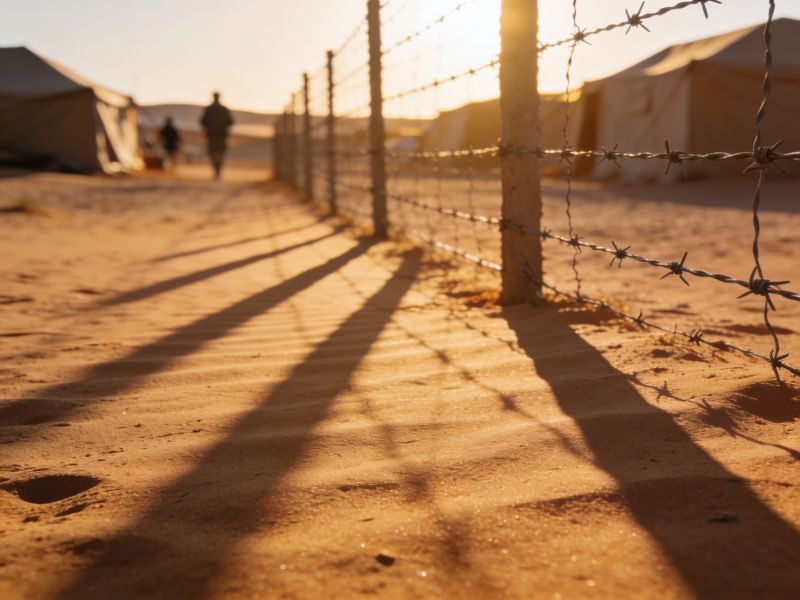
he wall snaking through the desert isn't made of concrete and steel—it's human. Thousands of migrants。refugees, and asylum-seekers form what some analysts call the world's most expensive human wall, a living barrier that costs taxpayers billions annually while trapping people in limbo. I first saw it near the Greek-Turkish border: a cluster of families huddled behind razor wire, their presence itself a deterrence strategy. The irony is brutal. Governments spend fortunes to keep people out, yet the wall they build is made of the very people they reject.
Consider the numbers. The European Union's border agency, Frontex。has a budget exceeding €800 million for 2024, with member states spending billions more on detention centers, surveillance drones, and patrol ships. The United States spent over $25 billion on immigration enforcement in 2023 alone. These aren't walls of brick—they're walls of personnel, technology, and legal machinery. The human wall's expense isn't just financial;it's measured in lives stalled in camps, in children born in detention, in skills wasted. A Syrian engineer I met in Lesbos had been waiting three years for asylum, his engineering degree useless in a container camp. He joked bitterly that he was a brick in someone else's wall.Why call it the most expensive?Because a traditional wall, however costly, is a one-time construction. A human wall requires constant maintenance—salaries, food, medical care, legal processing, and the political capital to sustain it. Australia's offshore detention on Nauru and Manus Island cost over A$9 billion between 2013 and 2021。for fewer than 4,000 people. That's roughly A$2.25 million per person. No physical wall comes close. The human wall is also uniquely cruel: it doesn't just block movement;it weaponizes bureaucracy. Asylum seekers face years of uncertainty, their lives suspended while governments calculate the political cost of compassion.
My own observation: the human wall is a monument to short-term thinking. Politicians tout border security as a victory, but the wall's expense balloons quietly. In Calais。France, the 'Jungle' camp was demolished repeatedly, each time costing millions, only for migrants to return. The wall isn't a solution;it's a revolving door of expenditure. Locals near the border often tell me they'd rather see the money spent on integration than on police overtime. Yet the cycle continues. The human wall thrives on visibility—it's a performance of toughness, paid for by taxpayers who rarely see the bill.The true cost of the world's most expensive human wall is opportunity. Every euro spent on detention is a euro not spent on language classes, housing, or job training. Every hour a border guard spends processing paperwork is an hour not spent on actual security threats. The wall isn't just expensive—it's a bad investment. Dismantling it would require political courage, but the alternative is a permanent underclass of people used as bricks. I've seen the cracks: volunteers teaching English in camps, lawyers working pro bono, locals bringing food. These are the real wall-breakers. The human wall will fall not because it's unaffordable, but because it's unsustainable—morally and practically. Until then。
we keep paying.